Save $ With This Natural Cleaner - First for Women Magazine

DIY Glass Cleaner
This all-natural cleaner gets windows and mirrors sparkling—and it’s made with items we already have around the house! Rubbing alcohol teams up with vinegar to remove grime and smudges while cornstarch thickens the solution so it doesn’t drip while we wipe.Courtesy of: First for Women


Gentle-on-Skin Antibacterial Dish Soap...First for Women Magazine

Recipe For Naturally Clean Dishes
For a homemade soap that’s gentle on skin but still powerful enough to get dishes gleaming, mix soap flakes and castile soap (which cut through tough grease) and lavender essential oil (which delivers antibacterial action). Bonus: The soothing scent will make washing the dishes a little more pleasant!
Courtesy of: First for Women


Alkaline Foods

Your Guide to Alkaline Foods That Slim


Dec. 1, 2013
chart listing acidic and alkaline foods
Download and print out this handy pull-out poster for a quick and easy reference guide to the alkaline foods that slim and energize—and the acidic foods that trigger weight gain. As a growing body of research shows, eating a diet rich in alkaline foods can ease internal inflammation, improve digestion and flush stubborn fat. But just what makes a food acidic or alkaline?
According to Robert O. Young, Ph.D., coauthor of The pH Miracle, this pH measurement isn’t based on the makeup of the food itself, but rather the chemical by-products the food produces during digestion and absorption. For example, lemons contain organic acids that give them a tart taste, but when this citrus fruit is consumed, it forms alkaline compounds that work to neutralize toxic acids in the body.
To make following an alkaline plan easy, FIRST asked health experts to categorize the most common alkaline and acidic foods. Simply fill your plate with 80 percent alkaline-forming foods (like the fruits and veggies listed on the right half of the chart) and limit intake of acid-forming foods (like the meat, dairy products and carbs listed on the left) to 20 percent of your diet. COURTESY OF: First for Women


Turn Off Hunger!

Feeling Hungry? 
The Aroma of Peppermint is a natural appetite suppressant!
Smell Peppermint daily to keep on track.....
Research at Wheeling Jesuit University in West Virginia 3,000 fewer calories were consumed per week.


Poorly Responsive Celiac Disease

Courtesy of: Celiac.org
It is estimated that up to 30% of people diagnosed with celiac disease have persistent symptoms while on a gluten-free diet.

Causes of Poorly Responsive Celiac Disease

Continuing Gluten Ingestion

The most common reason for persistent symptoms is continuing to ingest gluten, either knowingly or unknowingly.  Patients are encouraged to meet with a dietitian knowledgeable about celiac disease and the gluten-free diet to learn about the “hidden” source of gluten.  Read more about the Sources of Gluten.

Microscopic Colitis, Crohn’s Disease and Ulcerative Colitis

People with celiac disease have an increased incidence of microscopic colitis and inflammatory bowel disease (Crohn’s disease and ulcerative colitis). Microscopic colitis is an inflammation of the colon, or large intestine. Crohn’s disease is a chronic inflammatory disease of the digestive tract.  Ulcerative colitis is type of inflammatory bowel disease that causes sores in the colon. A colonoscopy is required to diagnosis these.

Small Intestinal Bacterial Overgrowth (SIBO)

Bacterial overgrowth is a condition in which abnormally large numbers of bacteria are present in the small intestine, while the types of bacteria found in the small intestine are more like the bacteria found in the colon.   This is usually diagnosed by a hydrogen breath test.

Pancreatic Insufficiency

Pancreatic insufficiency is the inability to properly digest food due to a lack of digestive enzymes made by the pancreas. This can be diagnosed by the measurement of enzymes in the stool.

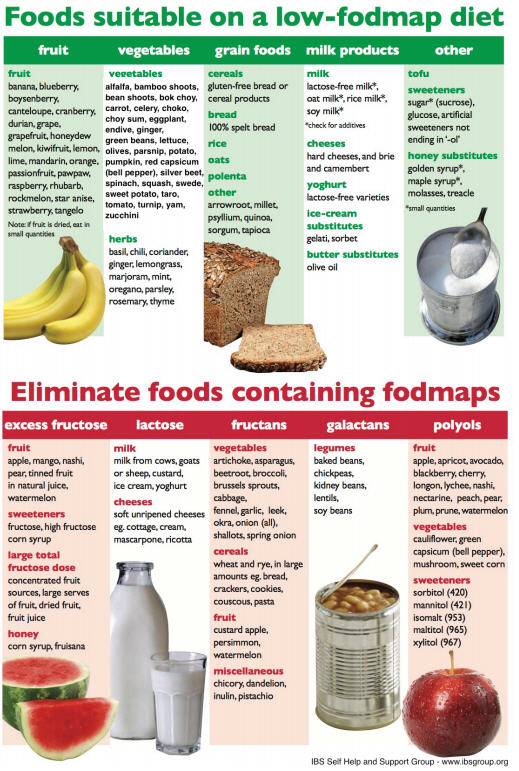
Other Food IntolerancesLow fodmap

People with celiac disease may have lactose or fructose intolerance, both of which can be diagnosed by a hydrogen breath test.  Some research has shown that people with lactose or fructose intolerance, and irritable bowel syndrome (IBS), inflammatory bowel disease (Crohn’s disease and colitis) benefit from a diet low in FODMAPs (fermentable oligosaccharides, disaccharides, monosaccharides and polyols). A low FODMAP diet is most effective under the guidance of a skilled, experienced dietitian, who will systematically help you eliminate and reintroduce different categories of the FODMAPs.

Refractory Celiac Disease (or Refractory Sprue)

Refractory celiac disease, also known as refractory sprue, affects up to 5% of  patients.  For these patients, the damaged villi in the small intestine do not heal from a gluten-free diet, and all other potential causes for this damage have been ruled out.  These patients are usually treated with steroids and immunosuppressants.

How Can I Find a Physician or Dietitian Who Can Address My Symptoms?

You can search for local health care practitioners familiar with celiac disease and gluten sensitivity in the  CDF Healthcare Practitioner Directory.
Poorly Responsive Celiac Disease | Celiac Disease FoundationCeliac Disease Foundation

What I Learned Today….

clip_image002 clip_image004

clip_image006 clip_image008

Essential Oils Body Map

Courtesy of: G Baldwin & Co


What is Celiac Disease?


What is Celiac Disease? 

Celiac disease is an autoimmune digestive disease that damages the villi of the small intestine & interferes with absorption of nutrients from food. For the people who have Celiac's Disease, their bodies are essentially attacking itself every time a person with celiac consumes gluten.
Do you have Celiac's? Check List to determine if you need to be screened by a Medical Professional and obtain Nutritional Therapy.


The Hershey Company | Chocolate and Nutrition Facts and Information

The Hershey Company | Chocolate and Nutrition Facts and Information


Gluten-Free Diet Dangers - Top 9 High-Risk Foods

Gluten-Free Diet Dangers - Top 9 High-Risk Foods

Prescription Medications

Food labels must declare all wheat ingredients (but not barley or rye ingredients), making it easier for us to rule out particular products. But prescription drug manufacturers don't follow the same rules. Some prescription drugs contain gluten grains (almost always wheat) as a filler, and there's no requirement that they disclose the wheat or gluten to consumers.
In fact, it can be difficult to determine if the drug you're taking is gluten-free — ingredients can change, even on brand-name prescription drugs, and the company's customer service representatives may not know.
To cope with this problem, make sure your pharmacist knows you need to be gluten-free (and knows what "gluten-free" means). Also, double-check every single refill.


6 Tips for Healthy Eating with Celiac Disease: Be a gluten sleuth.

6 Tips for Healthy Eating with Celiac Disease: Be a gluten sleuth.

Be a gluten sleuth.
Everything that goes in your mouth or touches your tongue needs to be screened for gluten. Read labels on vitamin supplements, toothpaste, mouthwash, cough medicine, and all over-the-counter medications. Talk with your pharmacist so that your prescription medications can be chosen with your special needs in mind (and look up gluten-free medicines at www.celiaccentral.org or www.celiac.com). Also, don't lick postage stamps or envelopes — the glue can contain gluten
.


Joy Bauer's Celiac Disease Food Shopping List

Joy Bauer's Celiac Disease Food Shopping List

Controlling celiac disease is not so much about foods you should eat as foods you shouldn't eat. The foods on this list are considered to be generally safe for people with celiac. You'll need to carefully check labels on all foods marked with an asterisk (*) because ingredients can vary from brand to brand.
Because most of the popular grains contain gluten, it is important to try new, safe whole grains. You’ll also need to eat plenty of vegetables and fruits to make sure that you get a wide variety of naturally occurring vitamins, minerals, fiber, and antioxidants. Toward the end of the grocery list, I’ve listed additives and ingredients that are also thought to be safe.
Fruits
ALL fresh fruits
ALL frozen whole fruits with no additives
Vegetables and Legumes
ALL fresh vegetables
ALL frozen vegetables with no additives, breading, or sauces
*Beans, canned
Beans, lentils, and peas, dried
Olives
Potatoes (all varieties)
*Pumpkin, canned, 100% pure puree
Seafood
ALL fresh fish and shellfish
ALL frozen fish and shellfish with no additives or sauces
Lean Proteins
ALL fresh meats and poultry with no breading or additives
ALL frozen meats and poultry with no breading or additives
Eggs
Tofu
Nuts and Seeds (Preferably Unsalted)
ALL natural nut butters
ALL nuts
ALL seeds (except rye and barley)
Grains, Cereals, Pasta, and More
Amaranth
Arrowroot starch
Buckwheat
*Cereals, dry: puffed and flake varieties made with amaranth, buckwheat, corn, millet, rice, or soy
*Cereals, hot: cream and flake varieties made with amaranth, cornmeal, buckwheat, hominy grits, rice, quinoa, or soy
Corn bran
Corn chips, plain
Corn flour/corn meal products
Crackers, gluten-free (such as brown rice, corn, and lentil)
Flour: amaranth, buckwheat, carob, chickpea, lentil, millet, potato, quinoa, rice, sago, sorghum, soy, tapioca, teff
Grits (corn or soy)
Kasha (not the same as Kashi)
Masa
Millet
Pasta made from beans, brown rice, corn, peas, potato, quinoa, lentils, or soy
Polenta
*Popcorn, air-popped and gluten-free packaged varieties
Potato chips, plain or *flavored
Quinoa
Ragi
Rice (preferably brown or wild)
Rice cakes, plain
*Soba, 100% buckwheat
Sorghum
*Soy crisps
*Tacos shells made with corn, hard and soft
Tapioca starch/flour
Teff
*Tortillas made with corn, soy, or brown rice
Tortilla chips, plain or *flavored
Dairy
*Cheese (preferably reduced-fat), not blue cheese
*Cottage cheese (preferable fat-free or 1% low-fat)
*Cream cheese (preferably reduced-fat)
*Ice cream (check labels; ingredients will vary from flavor to flavor)
Milk (preferably fat free or 1% low-fat)
*Milk alternatives (soy, almond, rice)
*Sour cream (preferably fat-free or reduced-fat)
*Yogurt (preferably fat-free or low-fat)
Miscellaneous
ALL pure herbs (check ingredients of *herb mixes)
ALL pure spices (check ingredients of *spice mixes)
Apple cider vinegar
Baking chocolate
Baking powder
Baking soda
Canola oil
Cocoa powder
Coffee, instant and ground (check ingredients of *flavored coffees)
Corn syrup
Cornstarch
Cream of tartar
Garlic
Gelatin
Honey
*Hummus (check labels; ingredients will vary from flavor to flavor)
Jam and jelly
*Ketchup
Maple syrup
*Mayonnaise (preferably reduced-fat)
Molasses
*Mustard
Olive oil
Pickles
Relish
*Salsa
*Soft tub, trans fat–free spread (regular and reduced-fat)
Sugar
Tea, black and green (check *flavored and herbal tea varieties)
Vanilla and other extracts
Vinegar, balsamic, red wine, or white
Wine, red and white
* The asterisk (*) indicates foods whose labels need to be carefully checked for gluten.
Safe (Gluten-Free) Additives
Acacia gum
Adipic acid
Agar
Algae
Algin/alginate
Allicin
Annatto
Arabic gum
Arrowroot
Ascorbic acid
Aspartame
Aspic
Astragalus gummifer
Benzoic acid
BHA
BTA
Dextrose
Ester gum
Fructose
Guar gum
Locust bean gum
Malic acid
Methylcellulose
Microcrystallin cellulose
Pectin
Pepsin
Stearic acid
Sulfites
Tapioca starch/flour (not pudding)
Whey
Xanthan gum
* The asterisk (*) indicates foods whose labels need to be carefully checked for gluten.


Celiac Disease Diet and Treatment - Food Cures

Celiac Disease Diet and Treatment - Food Cures

Source: JoyBauer.com

Celiac disease is a surprisingly common autoimmune disorder. It can begin at any time in a person’s life, and there is no consistent set of symptoms. Luckily, the disease is almost entirely treatable with the appropriate dietary changes — so feeling better is as simple as knowing what to eat and what to avoid.

Foods to Avoid for Celiac Disease

Source: Joy Bauer.com Foods to Avoid for Celiac Disease
Celiac Disease 
Here are lists of foods, ingredients, and additives to avoid. Study this list carefully and refer to it often. Eventually, you’ll have the foods memorized.I wish the guidelines for avoiding gluten were as easy as telling you to stop eating wheat, barley, and rye flour. 


That's part of what you need to do, but it is much more complicated than that. There are many hidden sources of gluten, and beyond that, some naturally gluten-free products can be contaminated with gluten
COMMON FOODS THAT CONTAIN GLUTEN
Barley (and anything with the word barley in it, such as barley malt)
Beer (all types)
Bleached flour
Blue cheese (sometimes made with bread mold)
Bran (also called wheat bran)
Bread flour
Bulgur
Cake flour
Communion wafers
Cracker meal
Croutons
Couscous
Durum
Farina
Farro
Flour (this usually means wheat flour)
Gluten, glutenin
Graham flour
Groats
Kamut
Malt (and anything with the word malt in it, such as rice malt, malt extract, or malt flavoring)
Malt beverages
Matzo
Oats and oat bran
Orzo
Pasta (all varieties made with wheat, wheat starch, oats, barley, rye, or any ingredient on this list)
Rye (and anything with the word rye in it)
Seitan
Semolina
Soy sauce (check ingredients—it’s often made with wheat)
Spelt
Suet
Tabbouleh
Teriyaki sauce
Triticale
Triticum
Unbleached flour
Vital gluten
Wheat (and anything with the word wheat in it, such as wheat grass, wheat berries, wheat germ, wheat starch; buckwheat is okay and is the only exception)
LESS COMMON FOODS AND FOOD ADDITIVIES THAT CONTAIN GLUTEN
Abyssinian hard (a wheat product)
Amp-isostearoyl hydrolyzed wheat
Brewer’s yeast
Cereal binding
Cereal extract
Dextrimaltose
Dinkel
Disodium wheatgermamido Peg-2 sulfosuccinate
Edible starch
Einkorn
Emmer
Filler
Fu
Granary flour
Mir
Udon (wheat noodles)
Whole-meal flour
FOODS AND FOOD ADDITIVES THAT MAY CONTAIN GLUTEN
If a favorite food contains one of the following ingredients, contact the company and ask questions. Depending on the manufacturing process, these suspect ingredients can sometimes be gluten-free.
Artificial color
Artificial flavoring
Bouillon cubes
Brown rice syrup
Caramel color
Coloring
Dextrins
Dried fruit (may be dusted with wheat)
Flavored coffee
Flavored vinegar
Flavoring
Food starch
Glucose syrup
Gravy cubes
Ground spices (wheat is sometimes added to prevent clumping)
Hydrolyzed plant protein (HPP)
Hydrolyzed vegetable protein (HVP)
Maltodextrin
Maltose
Miso
Modified food starch
Modified starch
Monoglycerides and diglycerides
Monosodium glutamate (MSG)
Mustard powder (some brands contain gluten; check ingredients)
Natural flavoring
Processed cheese (check ingredients)
Processed meats (cold cuts, hot dogs, sausages, and canned meats that contain wheat, barley, rye, oats, gluten fillers, or stabilizers)
Rice malt
Rice syrup
Seasonings (including powdered flavorings and dustings on chips, nuts, popcorn, rice mixes, and rice cakes)
Smoke flavoring
Soba noodles
Starch
Stock/bouillon cubes
Surimi (imitation seafood)
Textured vegetable protein (TVP)
Vegetable starch
Vitamins


Celiac Disease ~ Feel Better

Recently diagnosed with Celiac's Disease, I am on a mission to feel better and be an educated eater.

My symptoms began back in 1986..... originally diagnosed by my doctor as Spastic Colon ~ the new politically correct term is Irritable Bowel Syndrome. Which turns out is a SYMPTOM of Celiac's Disease and not truly a condition to treat.

28 years later, with the help of a Naturopathic Doctor the REAL issue at hand was diagnosed!
Celiac's Disease.

Celiac disease is a condition that creates inflammation in the small intestine, and damage in the lining. This prevents important components of food from being absorbed. The damage to the lining of the intestine comes from a reaction to eating gluten, which is found in wheat, rye, and possibly oats.

My symptoms have improved with the elimination of: Wheat, Gluten, Rye, Barley and Oats. Unfortunately, getting exposed to any of the offenders on accident is easy to do. Some of the offenders for Celiac Sufferers are listed on the ingredient list as another name. It happened to me on Sunday of this week, careful reading and review of ingested foods was not enough. Monday I suffered with Esophageal Pain all day. Back to basics it is for this girl!

I have become a Short Order Cook for myself, the family gets one meal and I get another! My basics are protein foods - Organic Chicken, Eggs and Pork. Vegetables are limited to potatoes and carrots at this point. I have discovered that at this point in my healing, foods that are considered high in FODMAPS affect the healing process and digestive system while it is "damaged".

Thanks for your support. I look forward to the day when food is not an enemy!!

Resources to my healing:

Celiac disease - sprue: MedlinePlus Medical Encyclopedia

http://www.dramymyers.com/2014/07/07/3-reasons-to-give-up-gluten/

Image Credit: Kids Health


Smile....


How Essential Oils Can Be Used....

Essential Oils can be used in several ways

Aromatherapy ~ For Respiratory Ailments via Steam Inhalation & Chest Massage

Healing properties of Essential Oils inhaled into the lungs diffusing throughout the body.

 Methods for Aromatherapy ~

  • Smell the Bottle of Essential Oils
  • With Steam
  • Use a Diffuser
  • Aromatherapy Air Freshener
  • Personal Perfume

 Massage Aromatherapy ~ For Physical, Emotional, or Mental Stress

 Massage Therapy stimulates circulation, releases toxins from the muscles, relaxes breathing and muscle  tension, and soothes  the nervous system.

 Recipes for Massage Therapy ~

  • Simple Massage Lotion or Oil                                                                                                        *Use 1/2 to 1 Tsp. Essential Oil per Pint of Unscented Body Lotion or Botanical Oil (Sunflower or    Sweet Almond Oil)
  • Simple Ailment Massage Lotion or Oil                                                                                        *Use 1oz Carrier Oil to 10 to 20 Drops of Essential Oils

 Bathing Aromatherapy ~ For Nervous Complaints

 Scented Baths assist with healing powers of Essential Oils

 Recipes for Bathing Aromatherapy

  • Add a total of 6 to 10 drops Essential Oil to Full Bathtub
  • For Sensitive Skin ~ Dilute Essential Oil in 1oz Carrier Oil first, then add up to 6 drops of the mixture to the tub


Lavender Essential Oil

Lavender Essential Oil 
Benefits:
  • Well known for its calming abilities, Lavender Essential Oil will melt stress and anxiety.
  • Commonly used to quiet your mind and help you get a good night’s sleep.
  • Lavender Oil is a must have for your family’s medicine cabinet. When mixed with JE Multi-Purpose Oil or Unscented Lotion, Lavender is considered safe enough to use for children’s minor cuts, scrapes, and mild sunburns.
  • Lavender Oil is floral, fresh, sweet, herbaceous, and slightly fruity.


Ingredients: Lavandula Officinalis - 100% Pure Therapeutic Grade Essential Oil